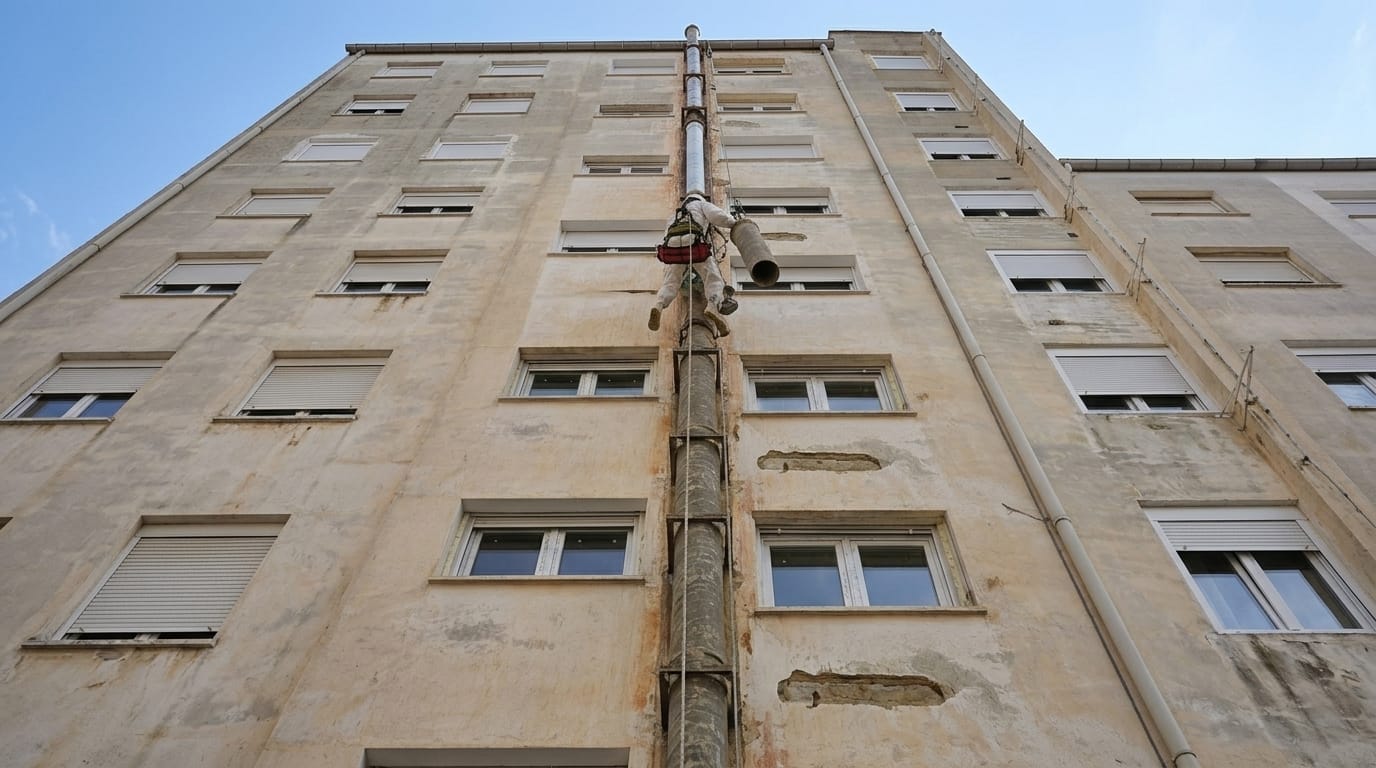
It all starts with a suspicion. An old slab, a gray material in the yard or a pipe that has not been touched for years... and the question arises in the community: "Can this be uralite?". At that moment, knowing how to act makes the difference between a quiet management or a major problem.
How to detect asbestos in Barcelona buildings without making a mistake
Asbestos was used for decades in construction throughout Spain. For this reason, it is still present in many buildings in Barcelona, especially in constructions prior to the years 2000.
But there is one key point: You can't always confirm just by looking. Many materials are visually similar, leading to confusion.
Where asbestos is usually found in old buildings
- Roofs and roofing (corrugated sheets).
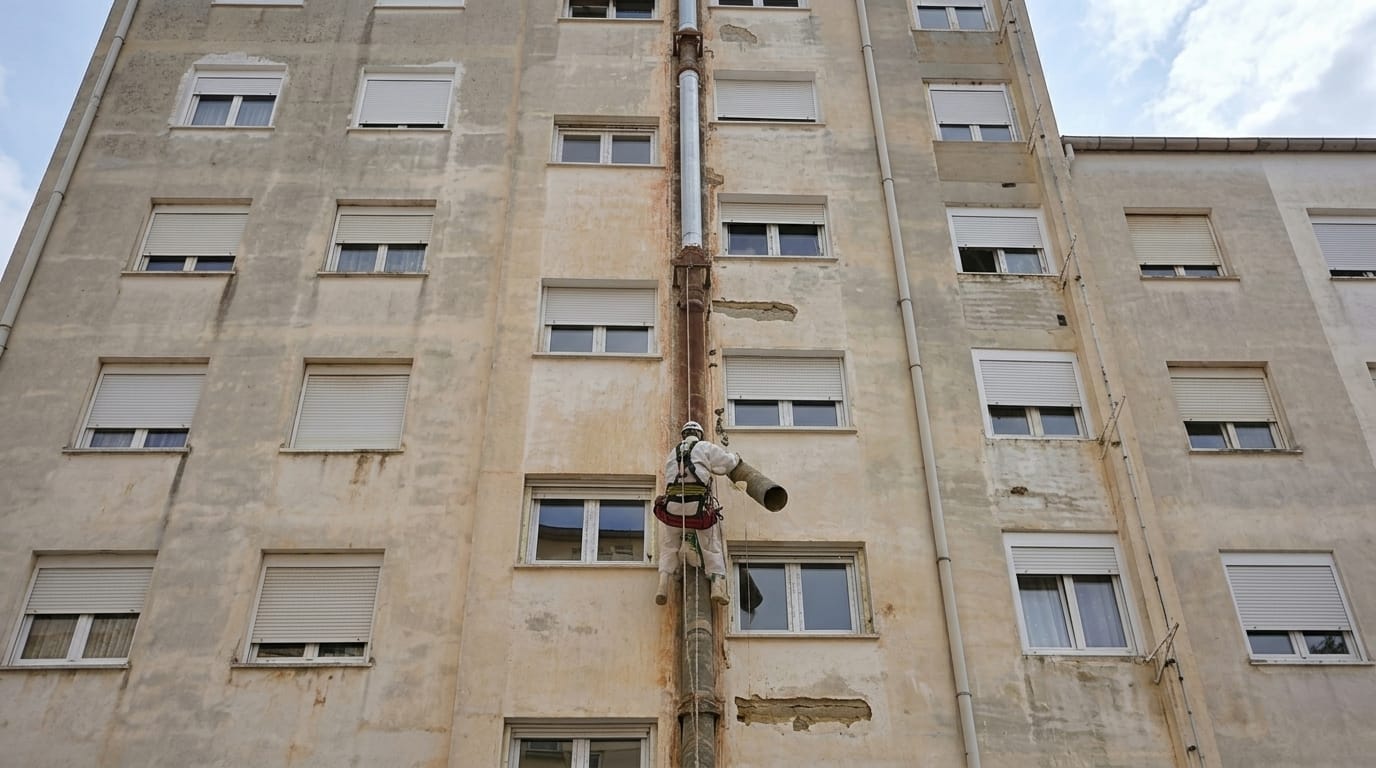
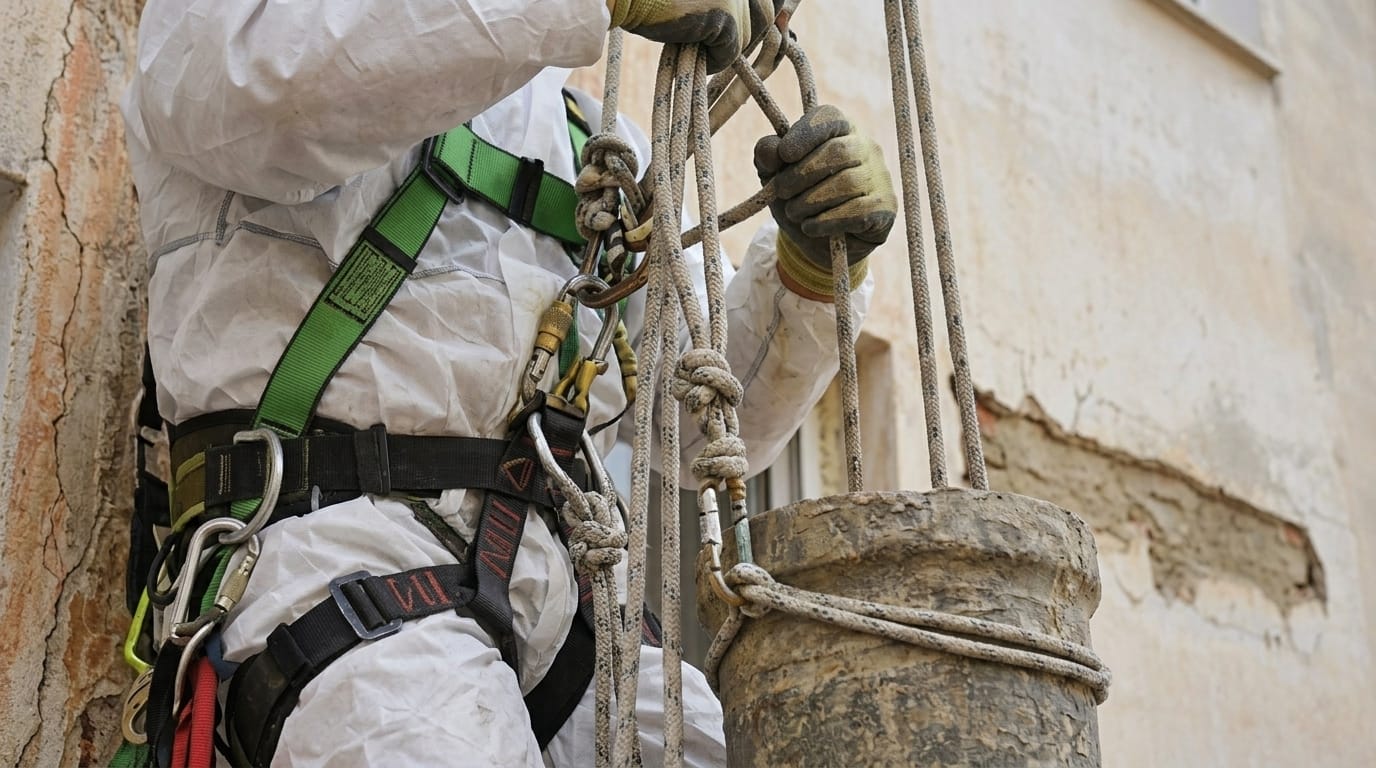
- Water downspouts in patios of lights.
- Enclosure plates or party walls.
- Old pipelines and tanks.
These elements, with the passage of time and inclement weather, can deteriorate, releasing the risk.
Signs that may indicate the presence of uralite
Although it is not an exact science, there are common clues that technicians observe:
Gray or fibrous material
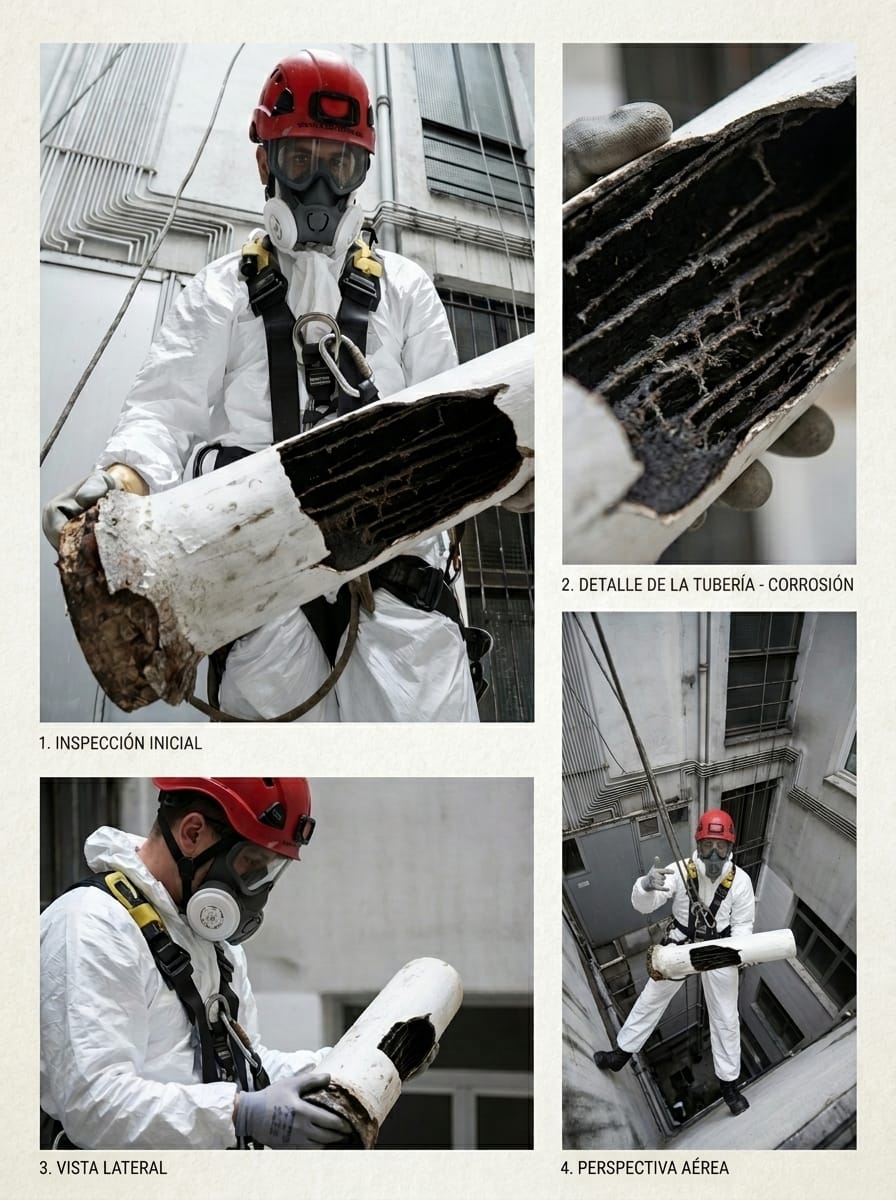
Characteristic texture when broken or worn.
Corrugated plates
The classic format of "uralita" in old roofs.
Rigid piping
Downspouts with a very aged appearance and cemented joints.
Seniority
Pre-2002 facilities not renovated.
Even so, this does not confirm 100% that it is asbestos.
Send us some photos by WhatsApp and we will give you a first quick visual assessment.
Why it is not easy to identify asbestos with the naked eye
This is where many communities go wrong. They confuse modern materials (such as asbestos-free fiber cement) with old ones or vice versa. The result is often to make wrong decisions or to generate unnecessary alarm among neighbors.
Therefore, the golden rule when in doubt is: Do not assume, do not manipulate and always confirm with a professional evaluation.
What risks exist if there is asbestos in the building?
The problem is not just the presence of the material itself, but how it is managed when it deteriorates. The real risks include:
- Health risks from exposure if plates are broken, cut or mishandled .
- Serious legal problems if intervention is carried out on a construction site without the mandatory RERA protocols .
- Immediate halt of ongoing reforms by the authorities.
- Drastic increase in costs due to errors and fines.
What to do if you have suspicions of asbestos
The best decision is not to act fast, it is to act well. A good initial assessment avoids costly mistakes.
- ❌ Do not break the material.
- ❌ Do not drill or cut.
- ❌ Do not manipulate to "see what it is".
- ✔ Request technical evaluation.
- ✔ Analyze the state of conservation.
- ✔ Decide with professional information.
When it is advisable to perform an inspection
Anticipating avoids emergencies. It is highly recommended that the community request a technical inspection of asbestos in these key moments:
- Before starting a renovation of the patio, facade or roof.
- If there are recurrent dampness or leaks associated with old downspouts.
- If at first sight there are clearly deteriorated or cracked materials.
Ask for a professional review through vertical works before making any decisions in haste.
How a specialized company can help you
Having an expert company in asbestos and vertical works in Barcelona brings absolute tranquility to the community of neighbors:
- Correct identification: We confirm without a doubt the presence of the material.
- Real risk assessment: We tell you if it is urgent to remove it or if can be maintained.
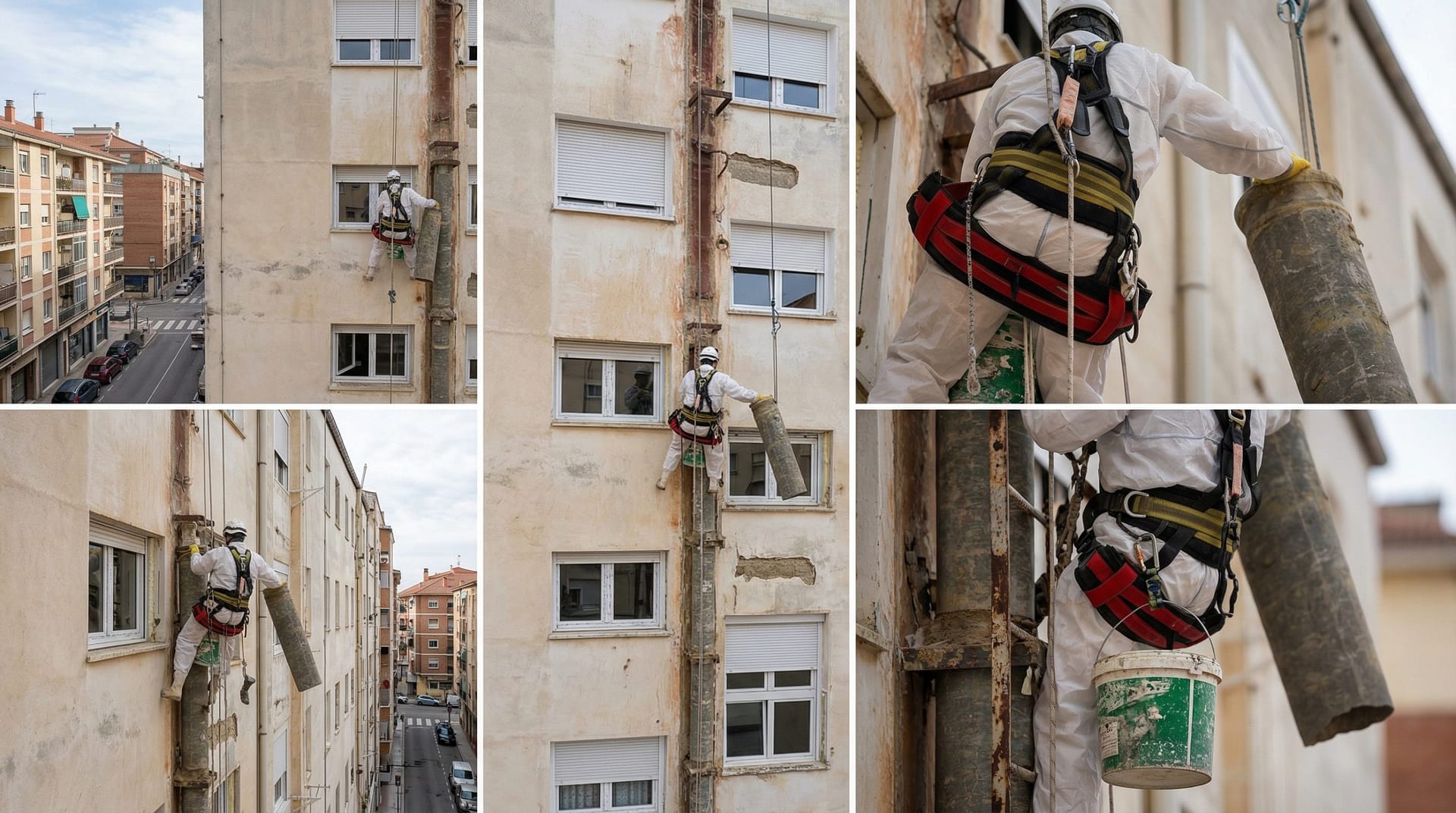
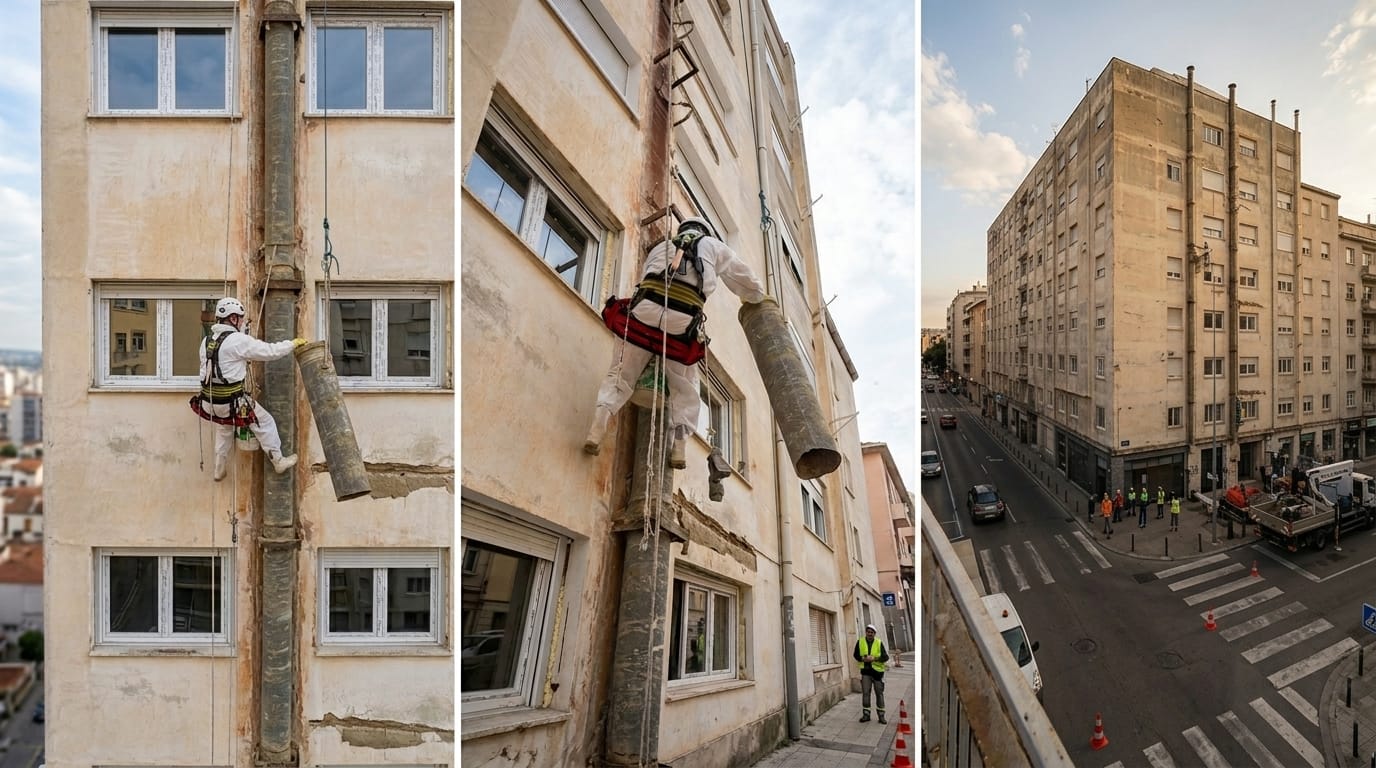
- Access to difficult areas: Asbestos inspection by means of vertical works in narrow yards.
- Savings and agility: By not using scaffolding, you drastically reduce costs and the intervention is much faster.
In Verticals Barcelona we are specialists in vertical works and management of asbestos. We guide you in a clear way, we analyze the real situation and we help you to decide the best way for your building.
Frequently Asked Questions
It can only be 100% confirmed by a professional technical evaluation or a specific laboratory analysis . Visual appearance gives clues, but is not definitive.
It is not advisable to handle it under any circumstances without control. If the material is damaged, touching or scraping it can release asbestos fibers into the air, which is highly dangerous.
It depends on its state of conservation and its useful life. If the material is in good condition, the current law does not require immediate removal, but if is damaged or at the end of its useful life, it must be removed by a company registered in the RERA.
The cost varies depending on the accessibility (if it requires vertical works) and the size of the building, but it is usually a quick and very affordable intervention compared to the cost of a sanction for mismanagement.